The counter techniques must only be taught when the student has acquired a good knowledge of all the basic techniques, ie approximately at 3rd dan level. Any attempt to teach them too early would risk confusing a practitioner whose understanding of Aikido is still recent.


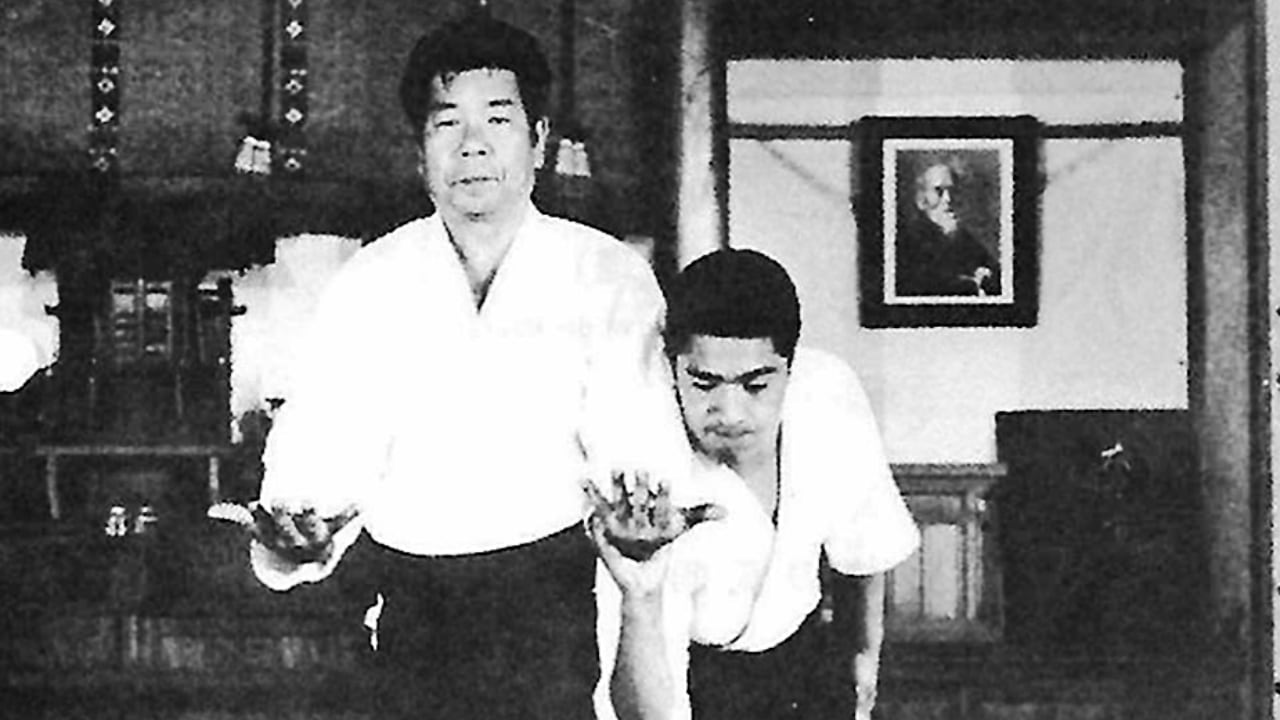
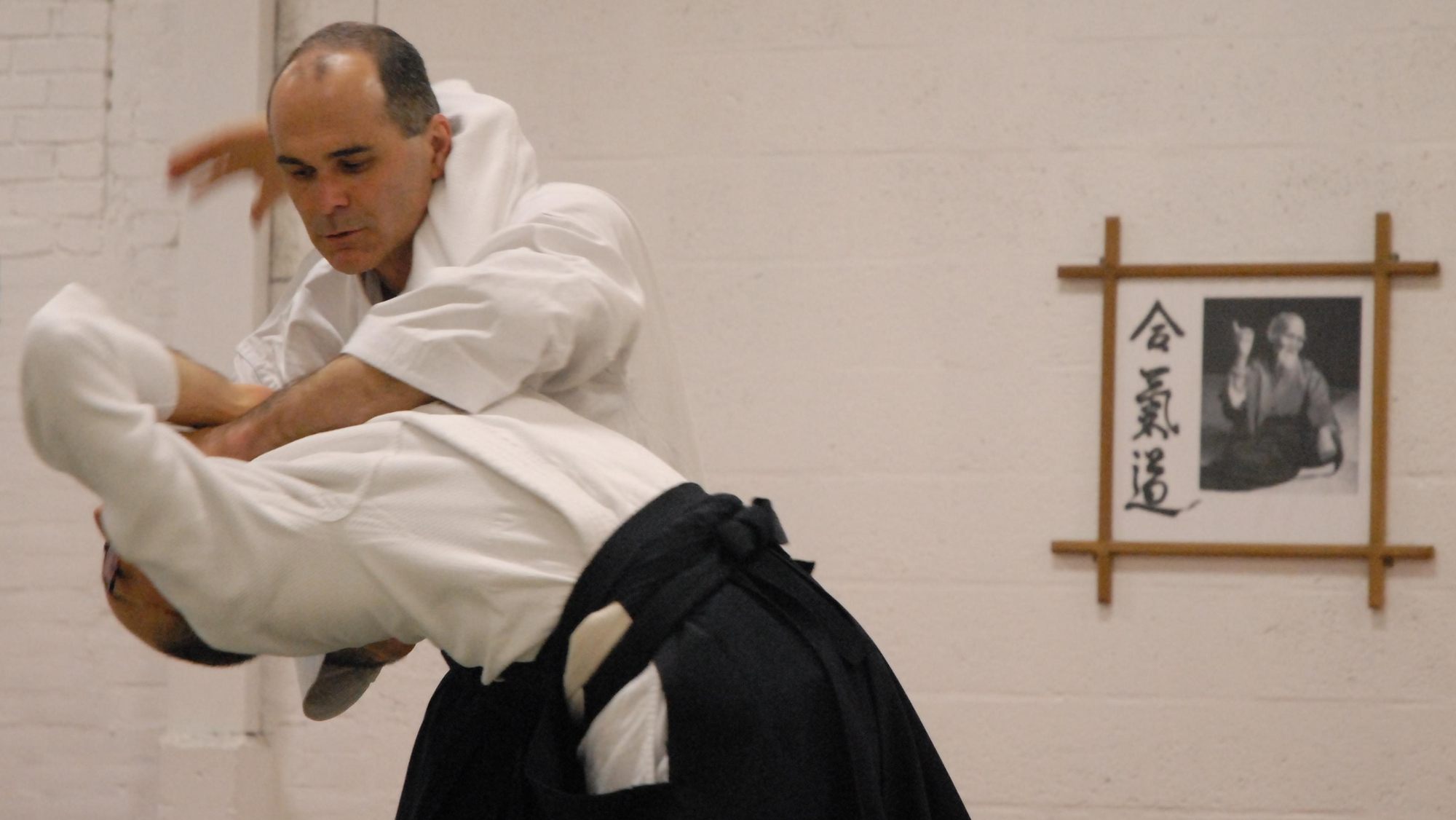
When you are about to be thrown by irimi nage, grab nage's tegatana, the cutting edge of the hand.


Go under his arm using the movement of happo giri.


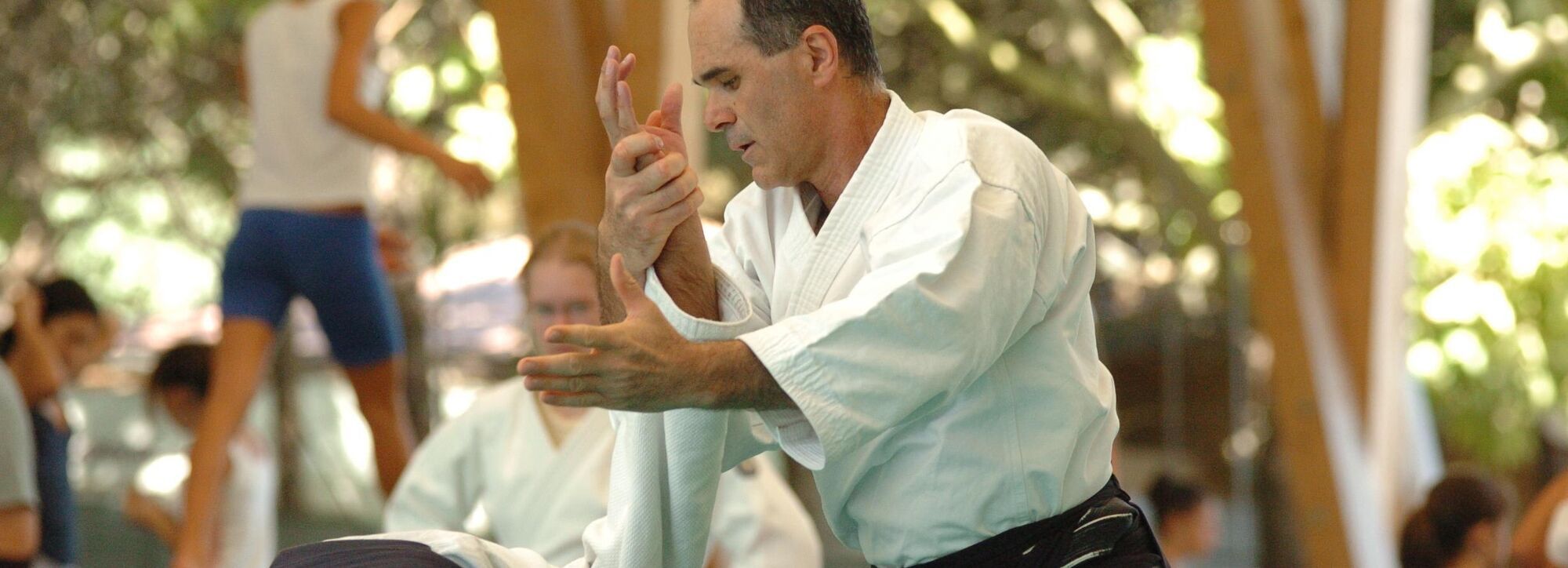
End up with tenkan and apply sankyo ura waza.
Aikido is not a sport, it is a martial art which laws (takemusu) are in harmony with the laws of the universe. Studying them allows the practitioner to understand his place in the universe. Aikido was born in Iwama, O sensei achieved in that village the synthesis of tai jutsu, aiki ken and aiki jo.
The International Takemusu Aikido Federation (ITAF) brings to the practitioner the structure he needs in order to work as close as possible to the reality O sensei MU defined. The official national representations are the guarantee of a teaching faithful to the Founder's.
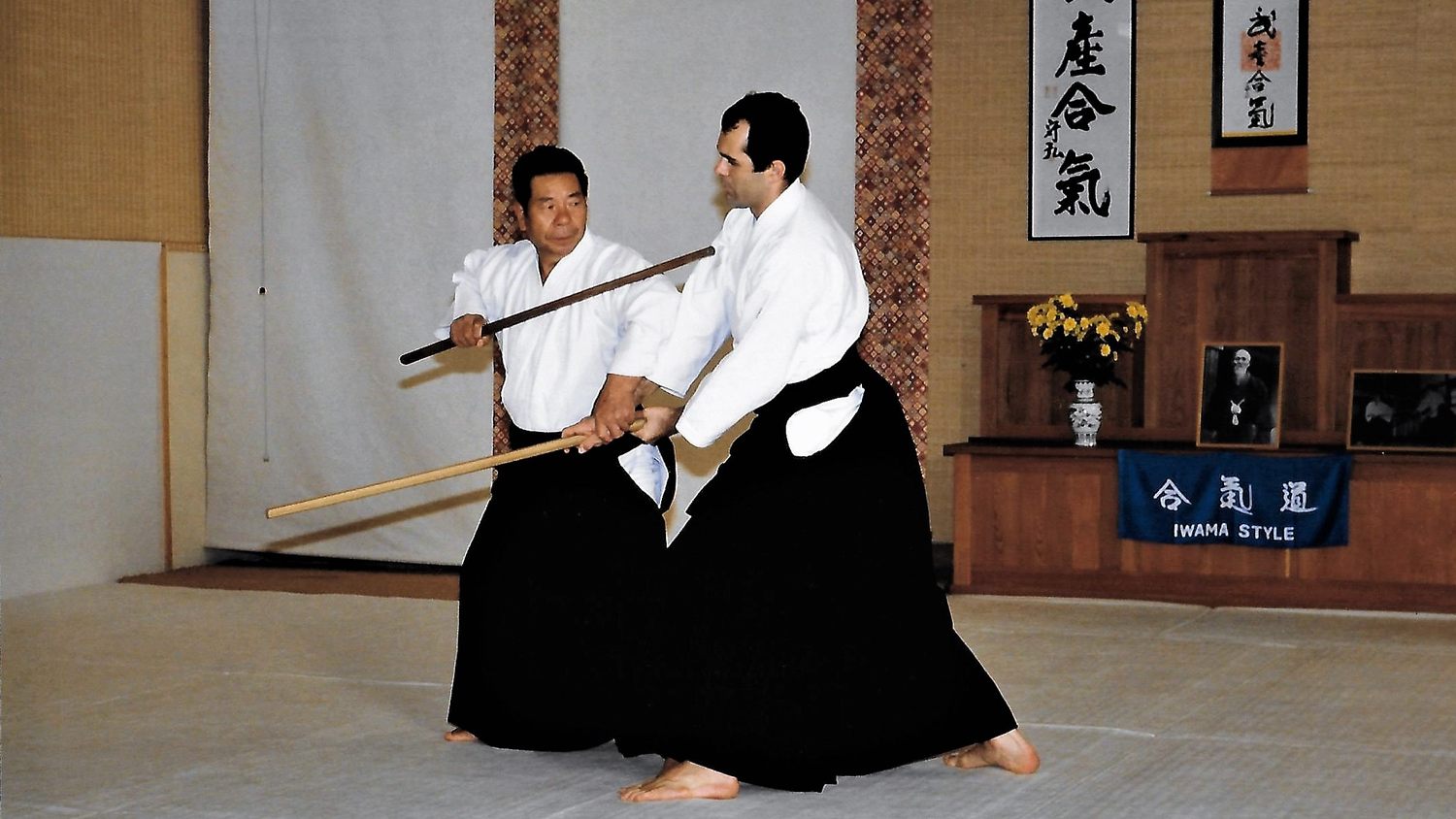
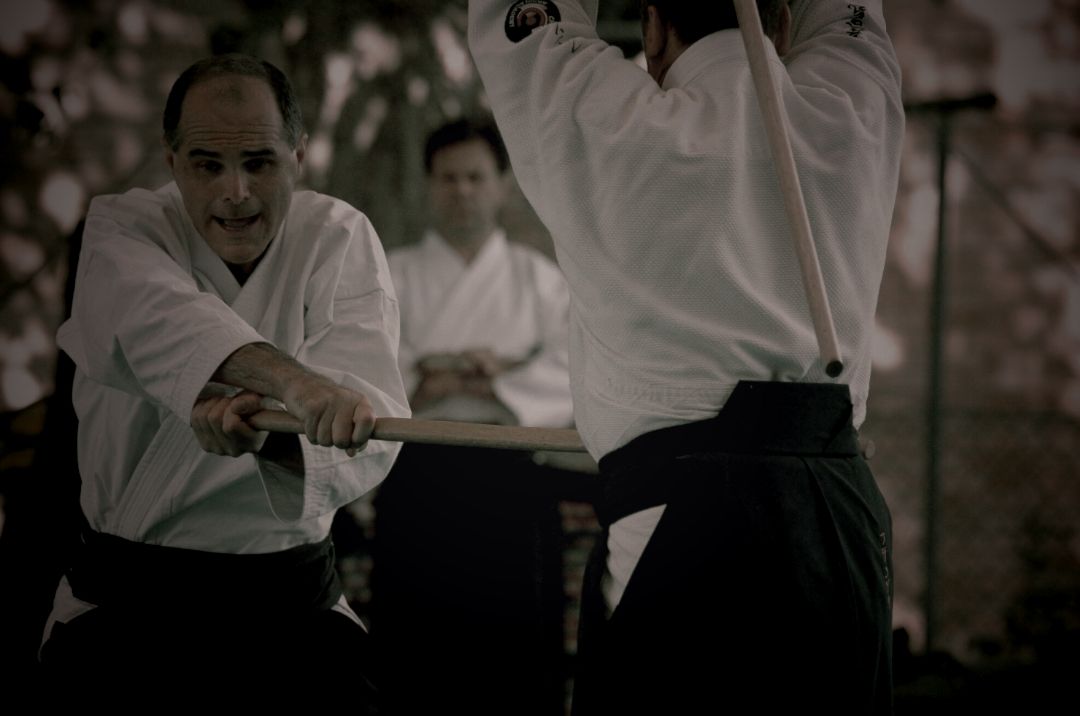
In modern Aikido, weapons are hardly taught, if taught at all. In O sensei's Aikido, on the contrary, aiki ken, aiki jo and tai jutsu are unified and form together a riai, a family of harmonious techniques stemming from one unique principle. Each techniques helps understand all the others.
Peace is a balance between a human being and the world around him. The true martial art's goal is not to become stronger than one's opponent but to find in that opponent a way to realize harmony. There is no enemy anymore as such, but an opportunity offered to reach unified ki.